

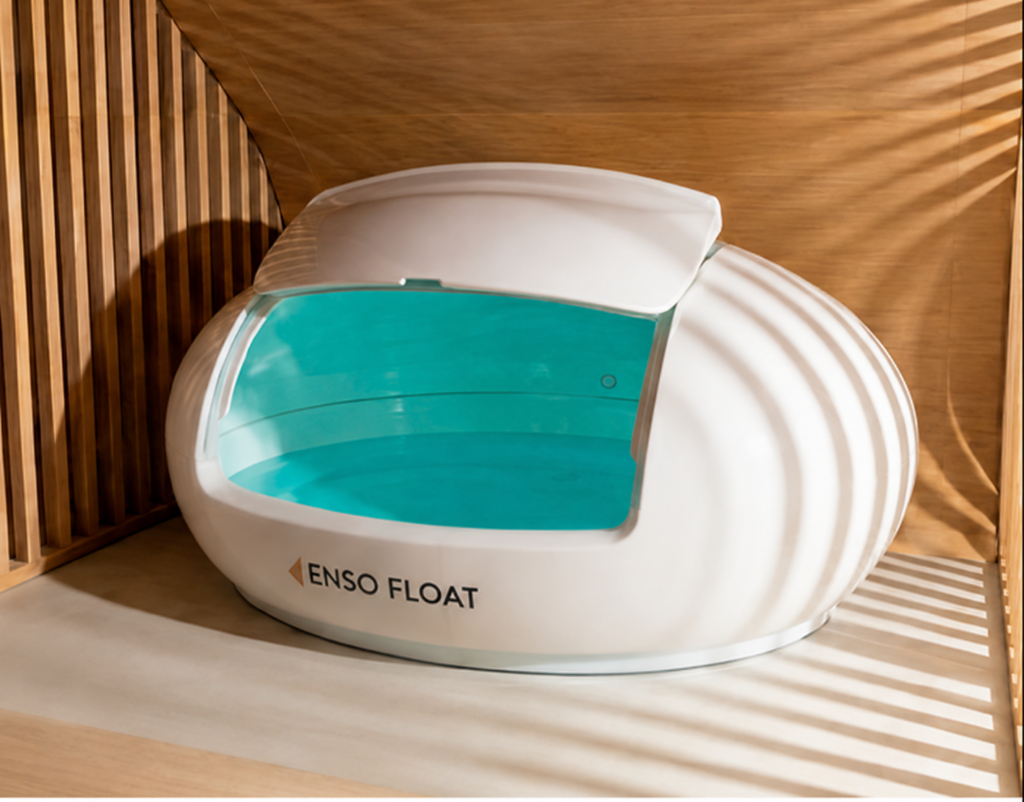
Technical specifications to provide as much information as possible on the components we use in the Enso Float Tank system.
| Parameter | Value |
|---|---|
| Float Tank Internal Dimensions | W: 240cm x H: 114cm x D: 166cm |
| Float Tank External Dimensions | W: 265cm x H: 143cm x D: 199cm |
| Pump System Dimensions | W: 87.5cm x H: 80cm x D: 65cm |
| Reservoir Dimensions | W: 102cm H: 191cm x D: 77cm |
| Parameter | Value |
|---|---|
| Internal Dimensions | W: 240cm x H: 114cm x D: 166cm |
| External Dimensions | W: 265cm x H: 143cm x D: 199cm |
| Material | Gel coated, Glass-Fibre Reinforced Plastic |
| Features | Internal & External Individually Addressable Lighting, Baffle Plate, Low Opening, Large Entry, Self-Cleaning Coating. |
| Parameter | Value |
|---|---|
| Dimensions | W: 102cm H: 191cm x D: 77cm |
| Material | Gel coated, Glass-Fibre Reinforced Plastic |
| Dry Weight | ~100kg |
| Wet Weight | ~1058kg |
| Technology | Level and temperature sensors |
| Parameter | Value |
|---|---|
| Dimensions | W: 87.5cm x H: 80cm x D: 65cm |
| Material | EFTE/Polypropylene (Pump Unit), 3030 Aluminium Extrusion (Frame) |
| Capacity | 150 L/min (Rated) 350 L/min (Max) |
| Head | 15.6m (Rated) 19m, (Max) |
| Efficiency | >70% |
| Drive | Magnetic |
| Speed | 2900 rpm |
| Output | 0.75 kW |
| Technology | Patented Run Dry Technology, Anti-Cavitation Technology. |
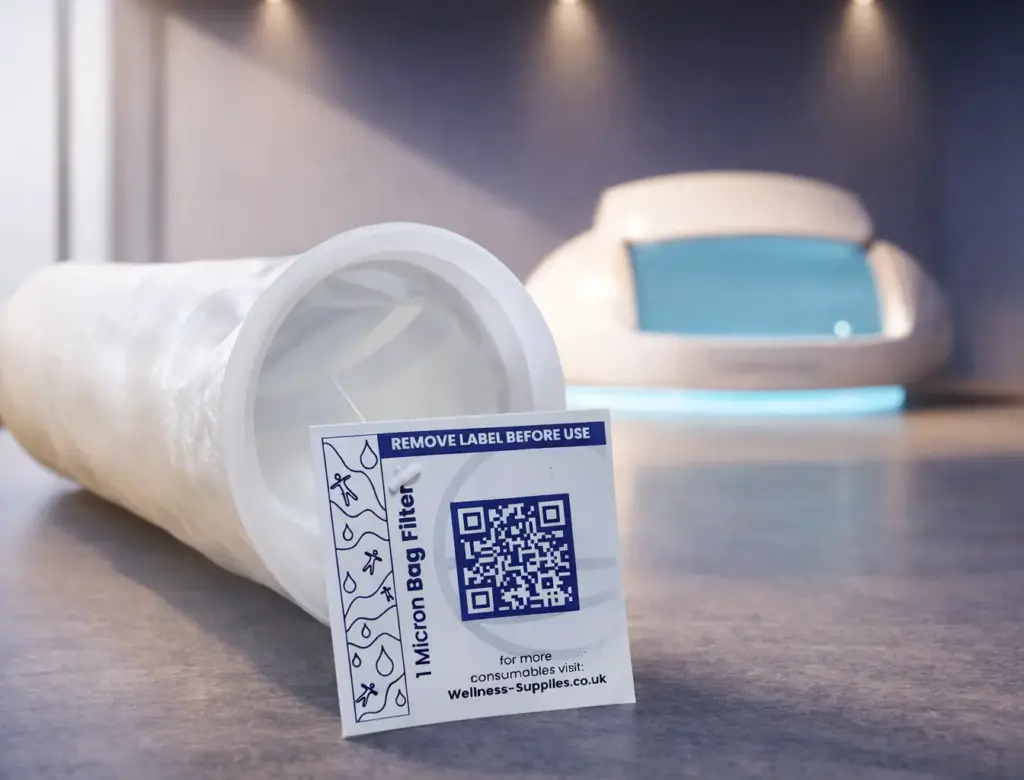
| Head | Dual 1-Micron Filters (supplied). In order to fill and empty a float tank quick enough between float sessions, two filters are used to double the filtration rate |
| Capacity | Comms cable between pod and control PC |
A single 1000 liter (220 gallon) reservoir tank made from GRP provide the storage for the solution when the Isolation Tank is emptied. This significantly reduces the amount of heat loss and evaporation but it also allows for easy cleaning of the tank between floats. Exo Insulation Jackets can be added to decrease energy usage by up to 30%.
| Parameter | Value |
|---|---|
| Power Supply | Single Phase 100v~240v |
| Min. Flow Rate | 1.5m³/h |
| Max. Float Rate | 12m³/h |
| Max. Power Consumption | 40W |
| Dosing Rate | Exceeds the equivalent of 30mj/cm at Max. Flow Rate |
| Ingress Protection Rating | IP64 |
| Frequency | 50/60 Hz |
| Working Pressure | 3 Bar Max. (43 psi) |
| Salt Water | 100% sea and salt chlorinated water safe |
| By-Products | No harmful gases or by-products produced |
The UV used in the Enso flotation tanks have the highest UV reflective index on the market, meaning supreme efficiency. The E-PTFE reach chamber is extremely repellent, maintaining UV reflectivity. Up to 95% reflection amplifying the exposure of microorganisms to the UV light. The unit neutralises bacteria, viruses, algae and fungi that traditional chemicals cannot, and is designed to harness the silver stabilised hydrogen peroxide.
Solving a Universal Float Tank Problem
Traditional Float Tanks rely on a continuous recirculation approach while the solution remains inside the tank, similar to the system used in a hot tub. This filtration method can overlook certain areas within the tank where the solution doesn’t circulate effectively. When some Float Tanks advertise over 100% filtration, they’re referencing the solution volume they can process between sessions.
A float tank containing 600L of solution, paired with a pump capacity of 300 litres per minute, would theoretically achieve 300% “filtration” during a 6-minute client transition. While this may sound attractive, the results aren’t as good as they seem.
Imagine you have a 100L bath tub filled with water and glitter that you wish to remove. You are given two ways to remove the glitter.
The issue with the first method is that while you have filtered out the volumetric equivalent of water, you cannot 100% guarantee that all the glitter will be removed. The glitter would redistribute around the water constantly and it would be extremely difficult to remove all of it. This is how a traditional float tank cleans itself. Dirt, skin particles and other contaminants float and redistribute constantly, making it extremely difficult to remove all contaminants.
To put this in a real world scenario, if a tank was guaranteed to remove 75% of contaminants per 600L filtered, there would be 25% of contaminants remaining after the first pass, 6.25% remaining after the second pass and 1.56% remaining when the new customer enters the tank. In order to hit 99.99% filtration, 3000L would have to be circulated.
In order to overcome the filtration problem that plagues conventional float tanks, the ENSO uses a filtration method that removes all solution from the pod. This guarantees that all the solution is run through the filters. It guarantees all the solution is run through the UV. This process is repeated every time that the ENSO is emptied or filled. Each filtering run of the ENSO cleans the solution by 99.999999%. By comparison, the theoretical tank from before would have to circulate its entire tank’s solution 14 times to match this value.


The ENSO is equipped with twin, two stage filters. The solution is first run a large course filter. This removes larger debris and prepares the solution for the second stage.
The second stage of filtration runs the solution though industry-leading filters, consisting of two 1-micron bag filters that are approximately 70 times smaller than a human hair. These filters provide maximum filtration without compromising the speed of the fill and empty times. The filters are so advanced that they can even remove hair dye colour from the water, which demonstrates their exceptional effectiveness in removing even the tiniest of particles.
The filters in the ENSO Float Tank use absolute filtration, a superior filtration method compared to nominal filters. Absolute filters are designed to remove particles of a specific size with a high degree of efficiency and consistency, whereas nominal filters have a wider range of particle sizes that they can capture, but with lower overall efficiency.
Absolute filtration ensures that particles of the specified size or larger are removed from the water with near-100% efficiency. This is important for float tanks, as even tiny particles can affect the quality of the experience. The use of absolute filtration in the ENSO Float Tank’s filters further highlights their high level of effectiveness and reliability.
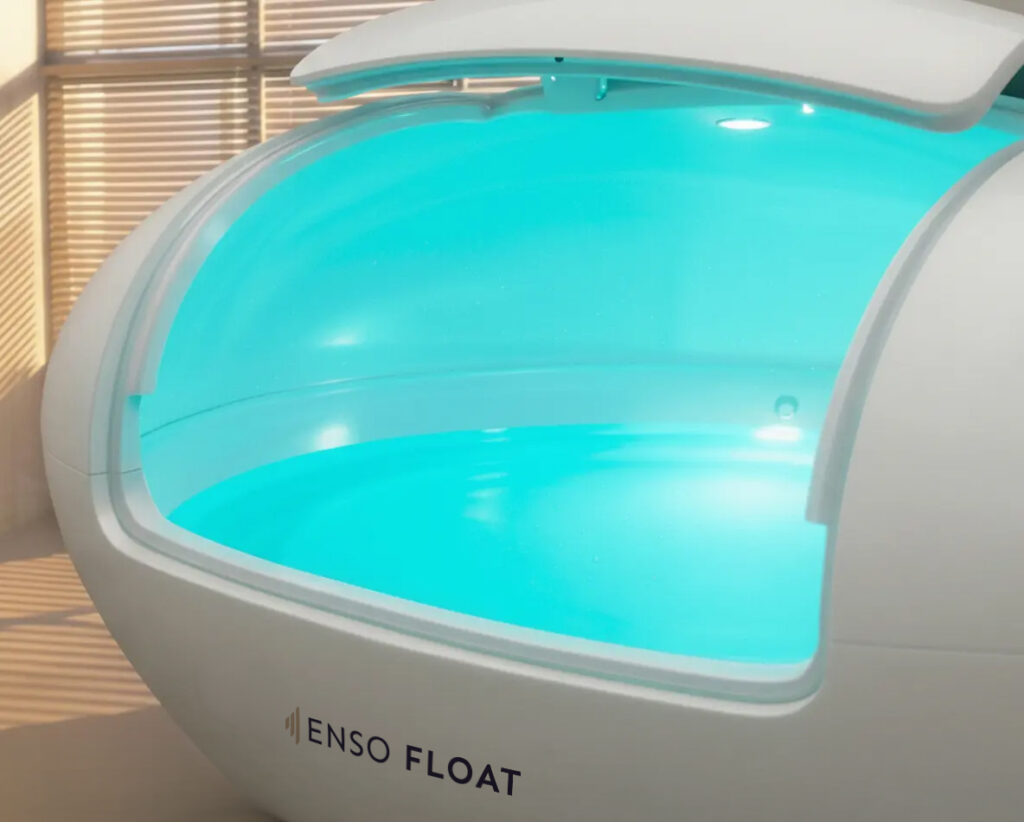
Following the two-stage filtering process, the solution is then exposed to a UltraViolet sterilisation system. This effectively eliminates any micro-organisms that may be left over, complementing our class-leading 1-micron filters.
The ENSO Float Tank’s advanced UV disinfection system – powered by the superior technology of amalgam lamps. Our state-of-the-art system offers unparalleled germicidal efficacy, destroying 99.9% of harmful microorganisms. Compared to standard UVC lamps, our amalgam lamps provide a remarkable 2-3 times greater intensity of UVC radiation, ensuring maximum disinfection with every use. With the ENSO Float Tank’s cutting-edge UV technology, you can be confident that your float sessions are as safe and hygienic as possible.
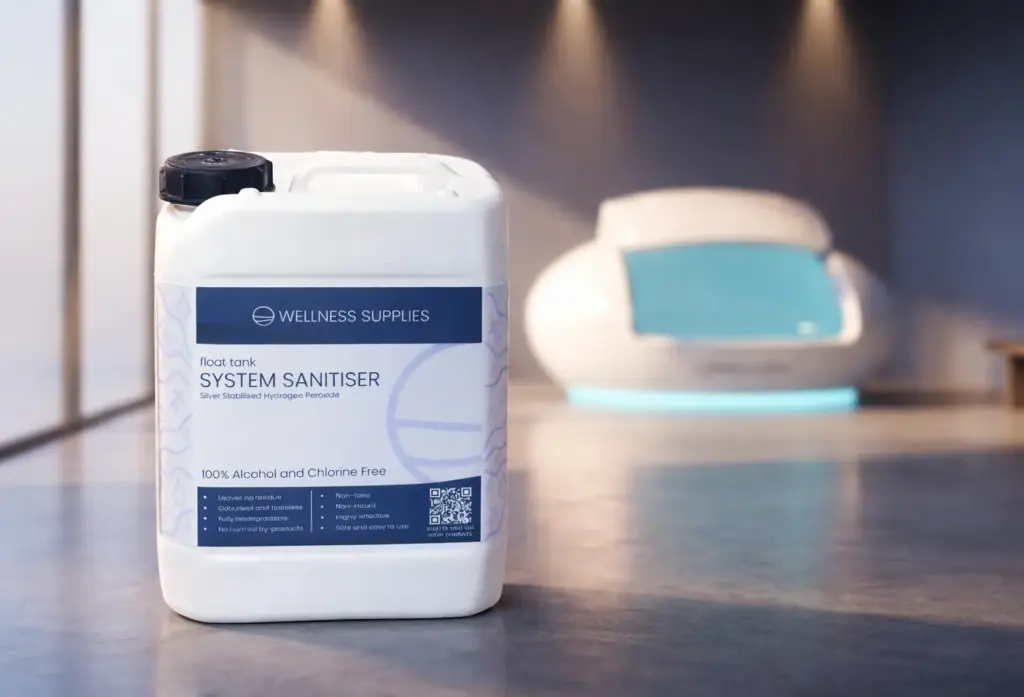
Once a day, the ENSO Float Pod is automatically dosed with Hydrogen Peroxide. This kills up to 99.999% of bacteria whilst leaving no harmful by-products. The automatic dosing function is fully integrated in the software, allowing you to set when to dose, and with the ENSO’s highly accurate dosing pump, how much to dose. Manual dosing is also available via the software for those busier days.
Making Profit from Our Products
When designing the ENSO, we had a took a look at someone of the biggest concerns and issues that float tank owners face. From our research, it was clear using conventional floatation systems were not going to solve the challenges we set out to solve. We required a system that was able to remove all solution from the Pod to achieve total filtration, and keep the solution stored for when it was needed.
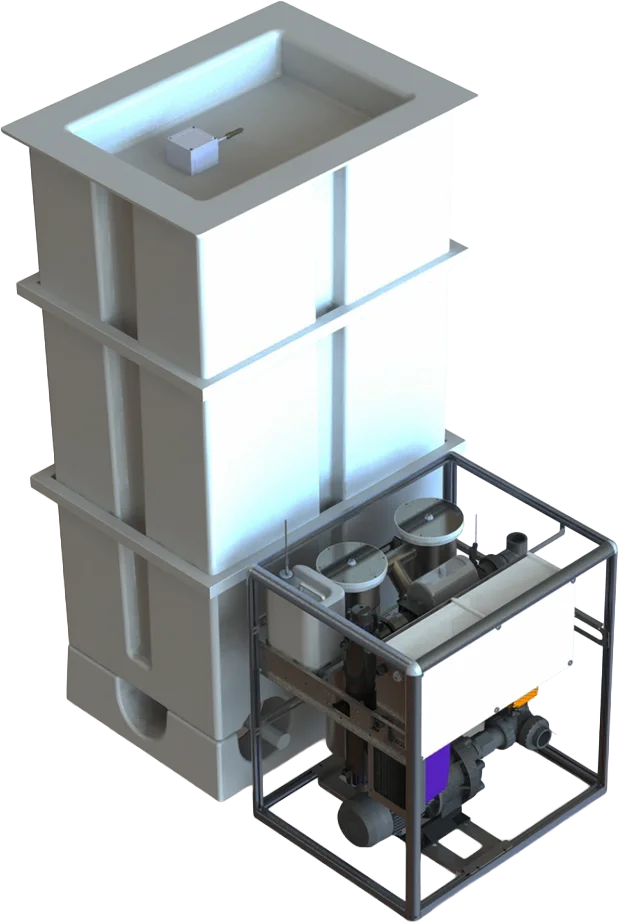

Conventional float tanks use a skimming based system (similar to that seen in a hot tub) to clean and filter the salt solution. The issue with this method is you can never guarantee that all the salt solution has been processed through the filters i.e. there may be dead zones where solution isn’t pulled through. To overcome this, the ENSO uses a reservoir system allows for 100% of the Epsom salt solution to process every time the ENSO Float Pod is filled and emptied.
By storing the salt solution in a lidded reservoir, common issues with floatation tanks are avoided. Humidity from the solution is reduced, protecting your float rooms from water damage. It also helps to inhibit solution loss via evaporation, lowering the number of times you’ll need to top up the solution.
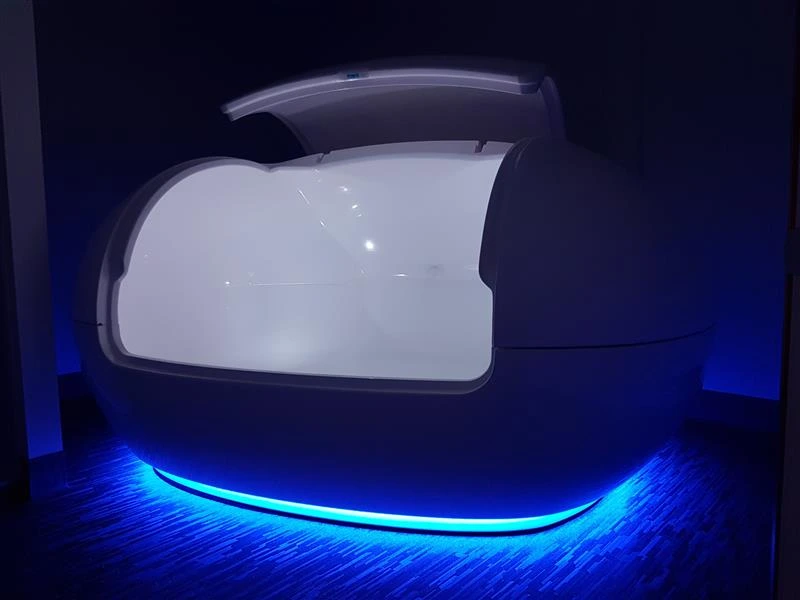
A key point of concern regarding any type of electrical equipment is it’s energy usage. When looking at floatation tanks, the biggest user of energy is heating. To reduce your heating costs, it is imperative to reduce heat loss in the solution.
The majority of float pods are produced from fibreglass which is a naturally insulative material. This means the majority of heat loss will be from where the solution is exposed to air. By storing the solution in a reservoir tank, the contact with air is massively reduced, and therefore heat is better retained.
Manage Multiple Pods, Fully Customisable Floats
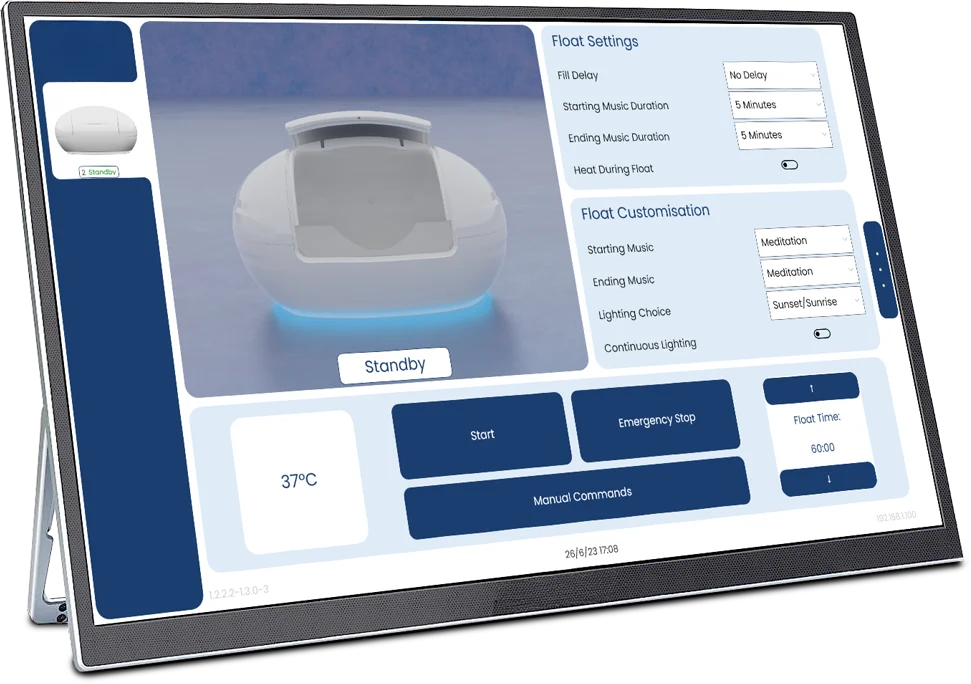
The ENSO Float App is our solution to controlling your ENSO Systems. Specially designed for ease of use, the ENSO Float App combines our experience of running a float centre into an easy-to-use package.
The software requires minimal training to use. The UI will adjust itself based on what the Pod is doing. Starting a float is as simple as pressing the “start” button.
New features for the software are constantly under development. The software contains a one click updater to keep your ENSO systems running the latest software.
Included with your ENSO Pod is a 14″ touchscreen monitor, with a reception PC to manage all of your ENSO Pods. A keyboard and mouse is also included as standard for those who prefer a physical touch.
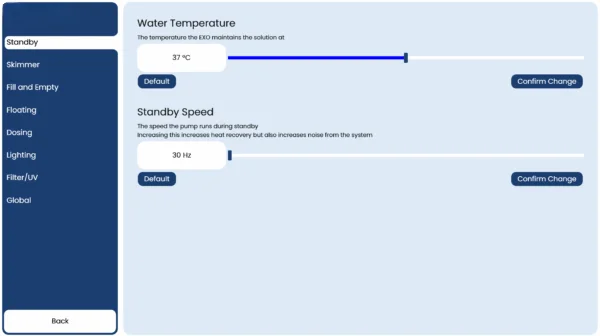
From core features like solution temperature, to energy saving features like Night Mode, the ENSO Float App will allow you to change all of these to your liking.
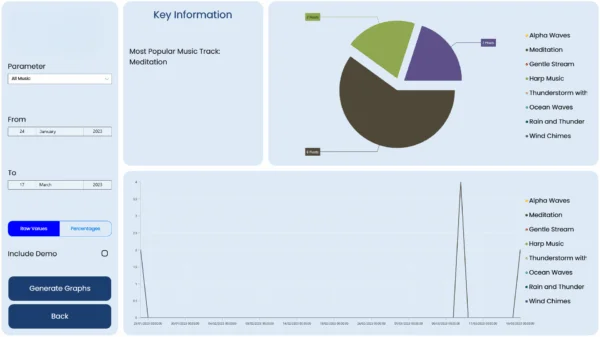
Take advantage of ENSO Float App logging feature. This togglable feature takes a log of all the floats run. This can then be displayed showing current trends, favourable music, and many other parameters.
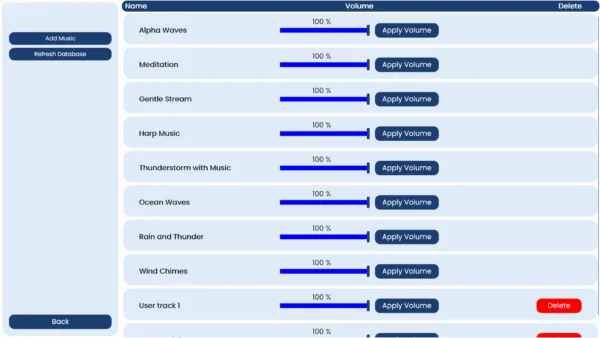
For those who wish for more than the pre-included music, use the ENSO Float App’s music manager. Add multiple custom music tracks for your floats, that fully integrate into the float cycle. Volumes can be set on a per track level, saving you time processing audio files to keep a consistent volume level.